Computer games have come a long way, in this post I'll be talking about the more recent 3D games and how they have become enhanced with the use of physics engines.
Going past the time of Wolf 3D and Blood, newer games have developed to take advantage of technology as it has advanced over time.
Until a few years back, 3D characters needed to have their movements animated and were treated basically like 2D characters were in older games, they would have preset movement animations for when they were stationary, when they performed an action and when they were killed. I remember first playing Soldier of Fortune 2, and considering it to have amazing graphics, it was the first time I had seen use of "physics"; the use of a computer to calculate how a body would move after it is killed. This feature looks quite poor compared to physics in games being released today.
In my opinion the use of complex physics engines is one of the most important aspects to creating a realistic game. Games perfected this feature and the newest games to come out yet will have implemented complex new systems to base character movement and materials to respond to their environment and almost any physical movement, a great new preview for this engine was released quite recently:
The video above shows character movement and realistic collision emulation.
The video below, shows how using a complex formula, 3D environments and materials can be made to react in a highly realistic fashion
Tuesday, 20 May 2008

Monday, 19 May 2008
Sound and moving image association
Before I became interested in visual arts, I was interested in audio, and still am. I find music to be a greater part of my life than film or most other activities. This is why I thought it would be great to do a little post about influential and inspirational soundtracks to films and audio environments.
I love classical music, one of my favorite still living composers is Zbigniew Preisner, he is well known for composing the soundtrack to The Double Life of Véronique (1991) and many other films.
His website contains a plethora of useful information, this quote can only partially describe why I admire him so much:
"I don't like going back and doing what I've already done, but I had to know whether my music 'sounded' as good without a film accompanying it. Did it stand up on its own two feet when removed from its cinematic context? To check this, I chose the Wieliczka salt mine, near Krakow: a secret, mysterious magical place 130 metres below ground. A unique atmosphere with exceptional acoustics.
The risk was great though: a subterranean symphony orchestra connected by 400 metres of cables to technical equipment on the ground above. Anything could have happened."
Weblink: www.preisner.com
When looking for soundtracks for my film I always first check through my archive of personal home-made sounds and compositions, even when I cannot find anything suitable I will still try to make my own soundtrack if I have the time. But when I don't, and the project is clearly not going to be publicized to any significant degree, I have the best time looking for suitable artists.
For my 16mm found footage project I chose to use a soundtrack which would suit the rough fast paced appearance of the footage, since most frames were different, the visual appearance would fluctuate and distort at great speed. This is why I chose a track from the Darkmatter Soundsystem compilation (link), a style of electronic music which is extreme to say the least, but not exactly innovative in my eyes. The track I chose in particular was perfect because of its generic hard-acid feel, a comedic notion in my eyes which accompanied the comedic clip in my animation perfectly once I had synchronized the movements.


Moving on,
I am intrigued by the aspect of using one's surroundings as a means of amplification and natural resonance. An artist known as Lustmord (site) specializes in creating soundscapes with dark moods and amazing resonance, he has recorded work in various locations, including vast caves and other acoustically unique locations. To listen to some of his work, you can go here: www.last.fm/music/Lustmord
But to me, Lustmord is just the start, since finding out about his work I have discovered many more amazing artists with styles combining doom-metal and sludge genres. One of my most favorite artists in this area are Halo, their album is free to download from embryo.antisound.net here
I love classical music, one of my favorite still living composers is Zbigniew Preisner, he is well known for composing the soundtrack to The Double Life of Véronique (1991) and many other films.
His website contains a plethora of useful information, this quote can only partially describe why I admire him so much:
"I don't like going back and doing what I've already done, but I had to know whether my music 'sounded' as good without a film accompanying it. Did it stand up on its own two feet when removed from its cinematic context? To check this, I chose the Wieliczka salt mine, near Krakow: a secret, mysterious magical place 130 metres below ground. A unique atmosphere with exceptional acoustics.
The risk was great though: a subterranean symphony orchestra connected by 400 metres of cables to technical equipment on the ground above. Anything could have happened."
Weblink: www.preisner.com
When looking for soundtracks for my film I always first check through my archive of personal home-made sounds and compositions, even when I cannot find anything suitable I will still try to make my own soundtrack if I have the time. But when I don't, and the project is clearly not going to be publicized to any significant degree, I have the best time looking for suitable artists.
For my 16mm found footage project I chose to use a soundtrack which would suit the rough fast paced appearance of the footage, since most frames were different, the visual appearance would fluctuate and distort at great speed. This is why I chose a track from the Darkmatter Soundsystem compilation (link), a style of electronic music which is extreme to say the least, but not exactly innovative in my eyes. The track I chose in particular was perfect because of its generic hard-acid feel, a comedic notion in my eyes which accompanied the comedic clip in my animation perfectly once I had synchronized the movements.
Moving on,
I am intrigued by the aspect of using one's surroundings as a means of amplification and natural resonance. An artist known as Lustmord (site) specializes in creating soundscapes with dark moods and amazing resonance, he has recorded work in various locations, including vast caves and other acoustically unique locations. To listen to some of his work, you can go here: www.last.fm/music/Lustmord
But to me, Lustmord is just the start, since finding out about his work I have discovered many more amazing artists with styles combining doom-metal and sludge genres. One of my most favorite artists in this area are Halo, their album is free to download from embryo.antisound.net here
The Relationship Between the Director and the Actor(s)
I'd like to adress this subject matter purely on the terms of how it sounds, how I find the relationship between the director and the actor to be key factor in the success of a film.
I'll be mainly assessing this with my current film project in mind, "The Unreliable Narrator". Before starting any part of my film i needed to choose a set of actors, the film I wanted create was going to be about isolation and hallucination. The main films I drew inspiration from were Stalker and Eraserhead.
Looking at these films and their directors made me think about what led them to pick certain actors for such roles.
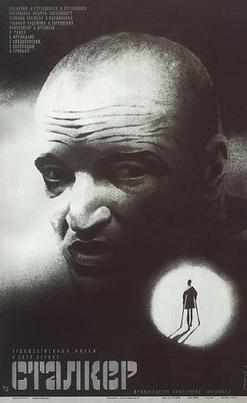
For example, when Andrei Tarkovsky was shooting Stalker (wiki) many of the actors were poisoned from the surrounding area in which a lot of the film was captured. An amazing recollection of the events during the filming can be found here: link
A quote from that article:
"Up the river was a chemical plant and it poured out poisonous liquids downstream. There is even this shot in Stalker: snow falling in the summer and white foam floating down the river. In fact it was some horrible poison. Many women in our crew got allergic reactions on their faces. Tarkovsky died from cancer of the right bronchial tube. And Tolya Solonitsyn too. That it was all connected to the location shooting for Stalker became clear to me when Larissa Tarkovskaya died from the same illness in Paris..."
It fascinates me that Tarkovsky and his cast would put their lives at such blatant danger for a film.
 David Lynch (IMDb) (wiki) - I have always admired Lynch's choice of actors, especially for Eraserhead, which was one of the main influences for my film. As Lynch became more recognized for his work he was able to take on more well known actors, I appreciate this because avant-garde directors usually tend to stick with unrecognized actors. In a way I perceive this as more of an exploitation of the audience's familiarity with the actor, where Lynch puts their situation in unusual circumstances, for example, Naomi Watts's role as one of the rabbits (from the series of episodes Rabbits (wiki)), where her face is not seen through the entire feature.
I wanted to add a particular student-life comedy element to my film, but I wanted to keep it to a style of my own, near the end of my film there is a scene based almost exactly on on a scene from Eraserhead, except set in student halls. The replication of the scene is more of a playful parody, Luckily my friend Leigh had shot a scene with me which suited the situation very well.

I'll be mainly assessing this with my current film project in mind, "The Unreliable Narrator". Before starting any part of my film i needed to choose a set of actors, the film I wanted create was going to be about isolation and hallucination. The main films I drew inspiration from were Stalker and Eraserhead.
Looking at these films and their directors made me think about what led them to pick certain actors for such roles.
For example, when Andrei Tarkovsky was shooting Stalker (wiki) many of the actors were poisoned from the surrounding area in which a lot of the film was captured. An amazing recollection of the events during the filming can be found here: link
A quote from that article:
"Up the river was a chemical plant and it poured out poisonous liquids downstream. There is even this shot in Stalker: snow falling in the summer and white foam floating down the river. In fact it was some horrible poison. Many women in our crew got allergic reactions on their faces. Tarkovsky died from cancer of the right bronchial tube. And Tolya Solonitsyn too. That it was all connected to the location shooting for Stalker became clear to me when Larissa Tarkovskaya died from the same illness in Paris..."
It fascinates me that Tarkovsky and his cast would put their lives at such blatant danger for a film.
David Lynch (IMDb) (wiki) - I have always admired Lynch's choice of actors, especially for Eraserhead, which was one of the main influences for my film. As Lynch became more recognized for his work he was able to take on more well known actors, I appreciate this because avant-garde directors usually tend to stick with unrecognized actors. In a way I perceive this as more of an exploitation of the audience's familiarity with the actor, where Lynch puts their situation in unusual circumstances, for example, Naomi Watts's role as one of the rabbits (from the series of episodes Rabbits (wiki)), where her face is not seen through the entire feature.I wanted to add a particular student-life comedy element to my film, but I wanted to keep it to a style of my own, near the end of my film there is a scene based almost exactly on on a scene from Eraserhead, except set in student halls. The replication of the scene is more of a playful parody, Luckily my friend Leigh had shot a scene with me which suited the situation very well.
Sunday, 18 May 2008
Digital Art
Everyone has their own interpretation of digital art. I see it as a very loose term, sometimes as a broad definition and sometimes as a specific subject matter.
I like to think of myself as an aspiring digital artist, though depending on the interpretation of the subject, the criteria may be far beyond me.
As time has gone on, artists have been inspired by and affected by technology as it, in turn, has developed. New media artists utilize technology as it becomes available and use it to create artwork which could not have been conceived by traditional means.
A very useful book which was recommended to me is plainly called "digital art", written by Christiane Paul, it covers many aspects which new digital technology has unveiled. This page contains usefull information from the book: link
I, like others, consider digital art to be a product of, or next stage of new media art. But I do not feel that I am entitled to an opinion as to what the term should mean. I like to think like this since most new age technology is based on a digital medium, and the possibilities of achievement with such a medium, especially when something as loose as art and expression are to be combined with it, seem to be unlimited.
Expression can tap into a massive range of themes and subjects, to incorporate a digital technology as a medium or partial aspect of this expression allows the final output be almost anything, to branch out and create an extremely diverse community. A community of digital artists where the only boundaries are not just technological skills and knowlede, but much much more importantly, creativity and imagination.
Id like to share some video's that I consider to be the work of great digital artists that have affected my art on a personal and inspirational level:
Created by: Alex Rutterford - this video synchronizes exactly to the audio (autechre)
Heres an interview with the artist explaining how he made it
This music video was created by 1st Ave Machine, I briefly talked about their compositing techniques in one of my earlier posts . The video is for a track by Chris Clark, one of my favorite electronic music producers.
This is a music video for another track by Clark, this time directed by Lynn Fox, an amazing artist. Go to the site: www.lynnfox.co.uk
This is an unofficial music video for another track by Autechre, I havent been able to find out about the artist.
I will be updating my list of favorite videos on a regular basis, you can check them out here.
Recently I have been increasingly interested in innovators of digital art and lesser known artists experimenting and exploiting new technology and older analog technology, I am not very familiar with most, but a very interesting video caught my attention recently which I felt i should post here:
I like to think of myself as an aspiring digital artist, though depending on the interpretation of the subject, the criteria may be far beyond me.
As time has gone on, artists have been inspired by and affected by technology as it, in turn, has developed. New media artists utilize technology as it becomes available and use it to create artwork which could not have been conceived by traditional means.
A very useful book which was recommended to me is plainly called "digital art", written by Christiane Paul, it covers many aspects which new digital technology has unveiled. This page contains usefull information from the book: link
I, like others, consider digital art to be a product of, or next stage of new media art. But I do not feel that I am entitled to an opinion as to what the term should mean. I like to think like this since most new age technology is based on a digital medium, and the possibilities of achievement with such a medium, especially when something as loose as art and expression are to be combined with it, seem to be unlimited.
Expression can tap into a massive range of themes and subjects, to incorporate a digital technology as a medium or partial aspect of this expression allows the final output be almost anything, to branch out and create an extremely diverse community. A community of digital artists where the only boundaries are not just technological skills and knowlede, but much much more importantly, creativity and imagination.
Id like to share some video's that I consider to be the work of great digital artists that have affected my art on a personal and inspirational level:
Created by: Alex Rutterford - this video synchronizes exactly to the audio (autechre)
Heres an interview with the artist explaining how he made it
This music video was created by 1st Ave Machine, I briefly talked about their compositing techniques in one of my earlier posts . The video is for a track by Chris Clark, one of my favorite electronic music producers.
This is a music video for another track by Clark, this time directed by Lynn Fox, an amazing artist. Go to the site: www.lynnfox.co.uk
This is an unofficial music video for another track by Autechre, I havent been able to find out about the artist.
I will be updating my list of favorite videos on a regular basis, you can check them out here.
Recently I have been increasingly interested in innovators of digital art and lesser known artists experimenting and exploiting new technology and older analog technology, I am not very familiar with most, but a very interesting video caught my attention recently which I felt i should post here:
Saturday, 17 May 2008
Animation & Looping
Animation takes time.
Animation loops are a way of saving time when a repetitive action is involved or could be involved.
When we look at cartoons like Pokemon we see how the directors utilize background looping, and looping various other sequences in nearly every scene solely to save money, a minimal result meeting with the bare requirements.
However, films can be about loops in themselves, short term and long term.

The shots to the left are from a short animation called Tango - by Zbigniew Rybczynski (1982) (IMDb). The film starts off with a what appears to be a normal event, with a character entering the room, but the character fully leaves the room at the end of their scene, allowing the same scene to be repeated again, this allows the director to overlay as many scenes as he wants in a fluent and humorous way.

One of my favorite artists with a theme based around loops is Cyriak ( www.cyriak.co.uk )
A lot of his work is comprised of short animations, almost always evidently looping.
His short animation mix video is comprised of short loops he made originally as indents.
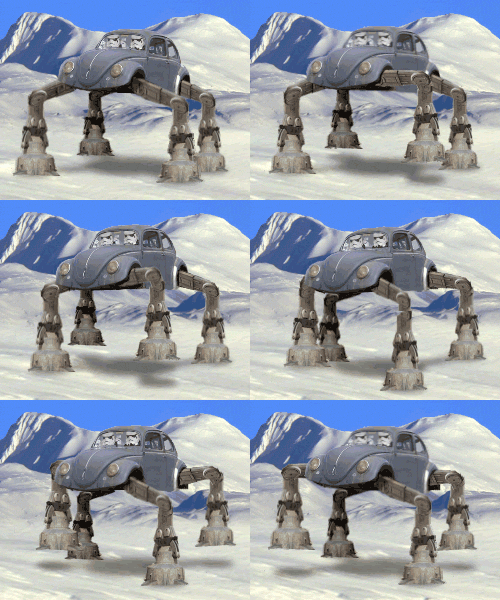
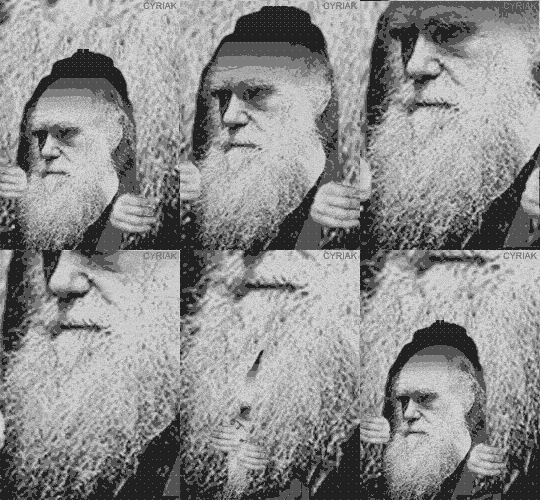
Looping an animation.
For an animation to loop, it needs to have a starting point identical to the ending point, and the transition between them through the course of the animation needs to be smooth.
Though these are just the conditions for conventional loops, the concept can be mixed about and made slightly irregular and when it comes to computer animation and games, the term "loop" can change drastically, but still in essence present the same concept.
For my animation project I decided to utilize sound as the main backbone to the loop, as a director for the project I planned out the scene and explained to my animator what i required. I wanted to combine traditional and "tacky" with modern and mechanical.
I considered the music to be the most important aspect of the loop, so I chose to use an extract from an Autechre (warp site) track titled Eutow. After looping the sound i then went on to render some of my 3d models as wire frames to overlay on the final product.
My choice in the combination of these styles was a play on how I've been inspired by a lot of videos for autechre's music yet I've still got a residual love for immaturity.
Animation loops are a way of saving time when a repetitive action is involved or could be involved.
When we look at cartoons like Pokemon we see how the directors utilize background looping, and looping various other sequences in nearly every scene solely to save money, a minimal result meeting with the bare requirements.
However, films can be about loops in themselves, short term and long term.
The shots to the left are from a short animation called Tango - by Zbigniew Rybczynski (1982) (IMDb). The film starts off with a what appears to be a normal event, with a character entering the room, but the character fully leaves the room at the end of their scene, allowing the same scene to be repeated again, this allows the director to overlay as many scenes as he wants in a fluent and humorous way.
One of my favorite artists with a theme based around loops is Cyriak ( www.cyriak.co.uk )
A lot of his work is comprised of short animations, almost always evidently looping.
His short animation mix video is comprised of short loops he made originally as indents.
Looping an animation.
For an animation to loop, it needs to have a starting point identical to the ending point, and the transition between them through the course of the animation needs to be smooth.
Though these are just the conditions for conventional loops, the concept can be mixed about and made slightly irregular and when it comes to computer animation and games, the term "loop" can change drastically, but still in essence present the same concept.
For my animation project I decided to utilize sound as the main backbone to the loop, as a director for the project I planned out the scene and explained to my animator what i required. I wanted to combine traditional and "tacky" with modern and mechanical.
I considered the music to be the most important aspect of the loop, so I chose to use an extract from an Autechre (warp site) track titled Eutow. After looping the sound i then went on to render some of my 3d models as wire frames to overlay on the final product.
My choice in the combination of these styles was a play on how I've been inspired by a lot of videos for autechre's music yet I've still got a residual love for immaturity.
Tuesday, 13 May 2008
Compositing and Synchronisation
CGI compositing is an extremely important area of specialization which is required in order to reach the highest level of realism for films utilising special effects.
What is it?
Compositing is the process of combining multiple scenes (usually a virtual component with a real life scene) in a realistic manner, creating an output which looks just as realistic as the original scene without noticeable flaws (de-synchronization of location, colour, movement)
Green/Blue screen compositing - also known as keying, the process involves a character or object you wish to composite into another scene and a single colour background. The colour to use for a background should not be naturally occurring or found anywhere on the object or character you wish to composite. This concept is simple an works on the basis that the software you are using will register the background colour as transparent, allowing only the foreground object to be visible and showing the scene you want in the background. There are many many more variables involved in getting a realistic combination, for example the lighting and atmosphere need to be the same for both scenes and the background colour needs to be solid.
There are other and new ways for compositing, one of which just involves using a camera and software to detect only the moving components in a scene, making the rest of the scene transparent. Static Background Keying, as i like to call it, is usually not solely used for major films and comes as standard with some webcams.
Camera Tracking - I came to be aware of how useful this attribute can be for super-realistic compositing after seeing some compositions by 1st Ave Machine, an animation studio in NYC.
Using camera tracking, the animators can create models within a virtual scene where the computer is aware of the movements the camera took whilst recording footage, this means that once the 3D animation is finished, the rendered output will move according to every movement the camera took, canceling out any de-synchronization. Combined with HDRI texture mapping the final product can look completely life like.
Compositing is used in many, many films, the technique can be used to transform environments and allow the wealthy film companies to create almost anything they want.
I have recently got into Adobe After Effects, for one of my films I'll be trying to composite some of my 3D models into a film project I have been working on, "the false narrator".
Heres a video of the original model, with green screen:
And here's a the final scene where i have keyed out the background and overlaid the original image, with extra effects like blur, noise, colour channel mixing and exposure mapped to sound intensity:
What is it?
Compositing is the process of combining multiple scenes (usually a virtual component with a real life scene) in a realistic manner, creating an output which looks just as realistic as the original scene without noticeable flaws (de-synchronization of location, colour, movement)
Green/Blue screen compositing - also known as keying, the process involves a character or object you wish to composite into another scene and a single colour background. The colour to use for a background should not be naturally occurring or found anywhere on the object or character you wish to composite. This concept is simple an works on the basis that the software you are using will register the background colour as transparent, allowing only the foreground object to be visible and showing the scene you want in the background. There are many many more variables involved in getting a realistic combination, for example the lighting and atmosphere need to be the same for both scenes and the background colour needs to be solid.
There are other and new ways for compositing, one of which just involves using a camera and software to detect only the moving components in a scene, making the rest of the scene transparent. Static Background Keying, as i like to call it, is usually not solely used for major films and comes as standard with some webcams.
Camera Tracking - I came to be aware of how useful this attribute can be for super-realistic compositing after seeing some compositions by 1st Ave Machine, an animation studio in NYC.
Using camera tracking, the animators can create models within a virtual scene where the computer is aware of the movements the camera took whilst recording footage, this means that once the 3D animation is finished, the rendered output will move according to every movement the camera took, canceling out any de-synchronization. Combined with HDRI texture mapping the final product can look completely life like.
Compositing is used in many, many films, the technique can be used to transform environments and allow the wealthy film companies to create almost anything they want.
I have recently got into Adobe After Effects, for one of my films I'll be trying to composite some of my 3D models into a film project I have been working on, "the false narrator".
Heres a video of the original model, with green screen:
And here's a the final scene where i have keyed out the background and overlaid the original image, with extra effects like blur, noise, colour channel mixing and exposure mapped to sound intensity:
CGI and Special Effects Part 2 - Animation of CGI and special effects
Animation of CGI and special effects:
The control of CGI for film is vital for artists seeking to achieve accurate and realistic motion.
Animation used to be a matter of frame by frame capture, 3D modeling and animation aplications can "tween" and plot paths for objects according to a vast range of variable inputs available.
So I'll go through the methods of input involved for digital animation of effects and general CGI
Manual keyframe input - this kind of process is my level of understanding at the moment, I am able to animate models in 3D through manual input, telling the program at what point in time and at what rate certain models should have their attributes modified, this can be anything from movement to a specific effect. The software will then tween the values and through a gradient/rate of your choice will integrate movement between the points in time identified.

Motion capture (wiki link) - This process can be carried out in a few different ways and has advanced considerably through time, here is an example of a non-optical process shown in this video:
I was very interested to find out that technology now permits 3D motion to be captured just using a small array of cameras (even just 2) to interpret and record motion.
Simulation and Generation - This method can be used for particle based simulations and other large character group animations for example swarms of birds or bees ect. (wiki)
A good example you may not have seen which involves computer generated animation:
The control of CGI for film is vital for artists seeking to achieve accurate and realistic motion.
Animation used to be a matter of frame by frame capture, 3D modeling and animation aplications can "tween" and plot paths for objects according to a vast range of variable inputs available.
So I'll go through the methods of input involved for digital animation of effects and general CGI
Manual keyframe input - this kind of process is my level of understanding at the moment, I am able to animate models in 3D through manual input, telling the program at what point in time and at what rate certain models should have their attributes modified, this can be anything from movement to a specific effect. The software will then tween the values and through a gradient/rate of your choice will integrate movement between the points in time identified.
Motion capture (wiki link) - This process can be carried out in a few different ways and has advanced considerably through time, here is an example of a non-optical process shown in this video:
I was very interested to find out that technology now permits 3D motion to be captured just using a small array of cameras (even just 2) to interpret and record motion.
Simulation and Generation - This method can be used for particle based simulations and other large character group animations for example swarms of birds or bees ect. (wiki)
A good example you may not have seen which involves computer generated animation:
Subscribe to:
Posts (Atom)

